
Post-Repair Masonry Sealed to the Right Product for Each Substrate
New mortar, replacement brick, and concrete patch each require a different formulation — we document the choice. One section, one substrate, one recorded product.
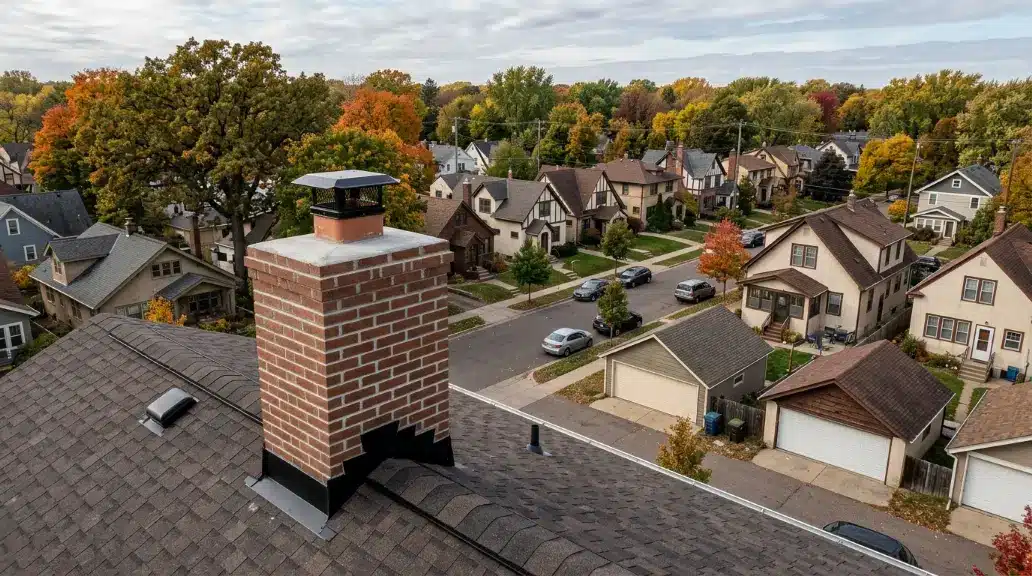
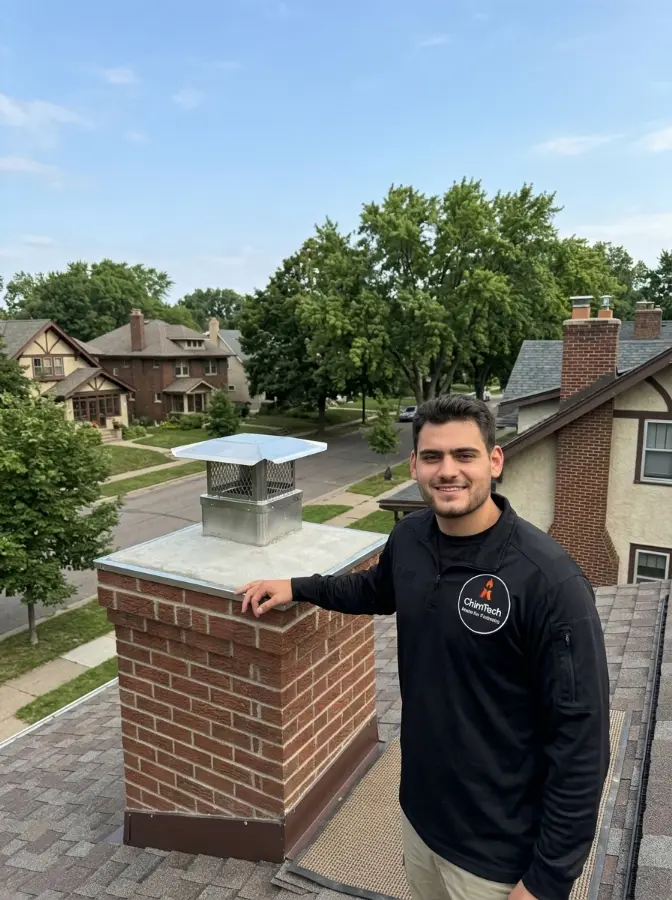
Targeted Surface Sealing After Chimney Repair
This is a narrower scope than full chimney waterproofing: post-repair sealing applied to a specific repaired section, selected by substrate type, and completed in the same visit as the repair. It applies to freshly repointed joints, replacement brick courses, and patched crown edges. It covers the section that was just worked — nothing more. Waterproofing addresses the full exterior as a unified system; this service addresses only the substrate that was disturbed during repair.
Why Freshly Worked Masonry Is More Porous Than the Brick Around It
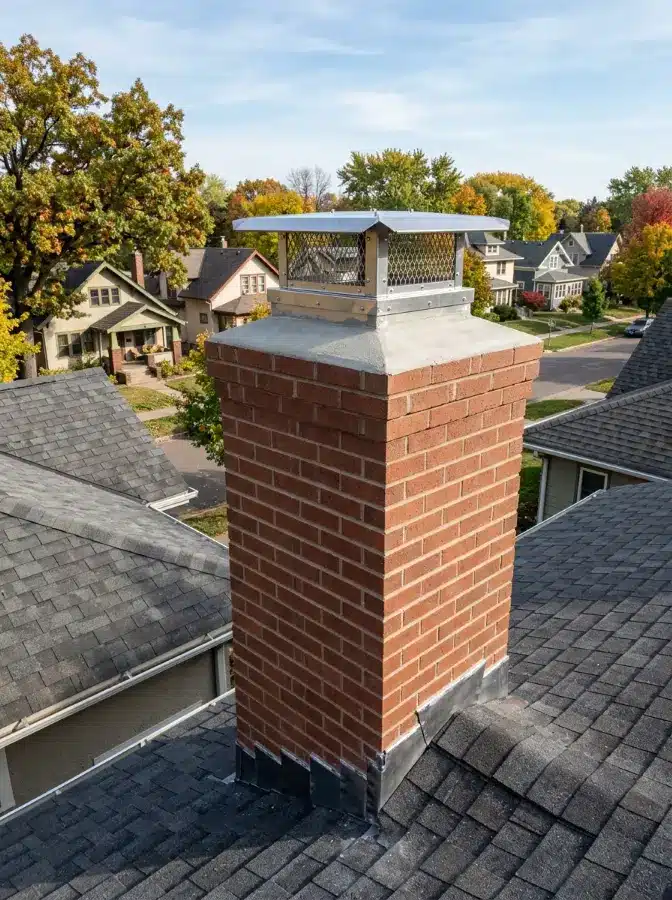
Selecting the Right Product Before We Open the First Container
New Mortar Joint
Fresh Portland or lime-blend is more porous than cured mortar and still releasing curing moisture. It needs a product that allows vapor transmission while blocking liquid water — a film-forming coat would trap that moisture and build pressure behind the surface.
Replacement Brick
Absorption varies by manufacturer and firing — modern high-fired brick absorbs less than older units — so the application rate is matched to that specific unit's actual absorption rate.
Concrete Crown Patch
Concrete cures slower than mortar with a distinct pore structure. While it's still finishing its cure, a surface consolidant — a penetrating product that binds loose particles and reduces porosity without forming a film — is the right choice.
The Substrate Assessment Travels With the Job Record
ChimTech's Surface Sealing Standards
Substrate evaluated first — new mortar, replacement brick, and concrete crowns each assessed before product selection.
Vapor-permeable products only on surfaces with active curing — no film-forming coatings on masonry still releasing moisture.
Surface consolidants used on concrete crown patches and surfaces where a film coat would trap residual moisture.
Application rate matched to the actual absorption rate of the specific substrate — not an industry average.
Product and rate documented in the job record at the time of application.
Same-visit sequencing where repair and sealing occur in one appointment — no gap that leaves new masonry exposed through a weather event.
How ChimTech Seals Exposed Chimney Surfaces
Substrate & Conditions Check
Before any product is selected, the crew assesses the repaired sections — identifying each substrate (mortar joint, replacement brick, or concrete patch) and evaluating its curing status; a joint placed the same day gets a different assessment than one placed four weeks prior. Ambient temperature and surface moisture are checked too — product applied to a wet or frost-covered surface fails.
Product Selection & Application
Once the substrate and surface conditions clear, the appropriate sealer is selected from on-truck stock. Application method varies by substrate — brush for crown patches and individual brick faces, low-pressure spray for larger repointed sections. The crew applies at the documented rate and allows dwell time before confirming penetration, with no over-application that leaves a visible film on the brick face.
Post-Application Verification
The crew performs a water-bead test on each treated section — water on a correctly sealed surface beads and runs off rather than absorbing. If a section shows continued absorption, the crew evaluates and applies a second pass before leaving. The final product, rate, and test result are entered into the job record before the visit closes.
Where ChimTech Performs Post-Repair Surface Sealing

Protect Fresh Masonry Before Minneapolis Weather Takes Over
Frequently Asked Questions — Post-Repair Surface Sealing
Targeted surface sealing addresses only the specific sections of masonry disturbed during a repair — a repointed joint, a replacement brick course, or a patched crown edge. Full chimney waterproofing treats the entire exterior surface as a unified system. When surrounding masonry is sound and shows no widespread porosity, targeted sealing on the repaired section alone is the correct and more precise scope.
Fresh mortar is still releasing moisture from the curing process. Applying a film-forming sealer over actively curing mortar traps that moisture behind the surface, and when temperatures drop below freezing it expands and can fracture the joint. Vapor-permeable products let curing moisture continue escaping while blocking surface water — which is why product selection is made after evaluating the curing status of each substrate, not before.
The preferred sequence is same-visit sealing: the repair is completed, the substrate is assessed, and the sealer is applied before the crew leaves — eliminating any gap where fresh masonry is exposed to rain or freeze. If ambient temperature or surface moisture aren’t right on the repair day (a wet surface or sub-40°F reading, for example), ChimTech schedules a follow-on treatment as soon as conditions allow.
Concrete cures more slowly than mortar and keeps releasing moisture well past the point where it appears dry. Sealing too early with the wrong product traps residual cure moisture and can cause surface dusting, delamination, or premature sealer failure. ChimTech uses surface consolidants on crown patches still finishing their cure — penetrating products that reduce porosity without forming a film — rather than the sealer used on brick or mortar joints.
Yes. Every surface sealing job produces a written job record that includes the substrate type evaluated, the product name and formulation, the application rate, and the date of application. That record is accessible if the chimney is re-inspected in future years or if a home inspector or buyer asks what product is on a specific section.
Pre-1940 brick common in neighborhoods like Longfellow, Nokomis, and Northeast Minneapolis is softer and more porous than modern manufactured brick, so it absorbs product faster and at higher rates — which affects both product selection and application rate. ChimTech’s substrate assessment accounts for brick age and porosity: older soft brick gets a different application rate than modern high-fired units, even when the same base product is appropriate.