
Chimney Efflorescence Diagnostics & Removal — Source Investigation, Written Findings, and Deposit Clearance
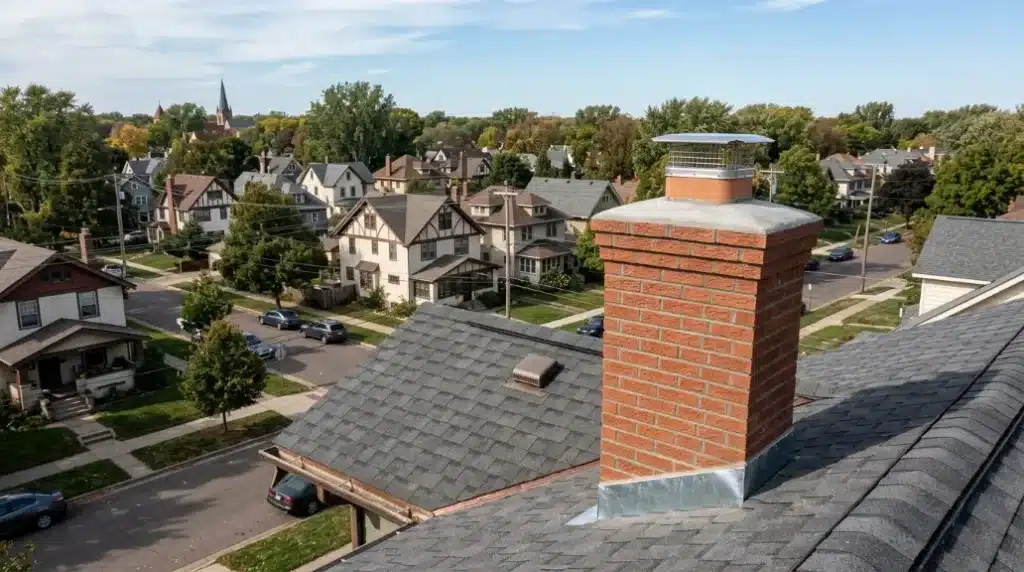
What a Minneapolis Efflorescence Diagnostic & Removal Visit Covers
Minneapolis Salt Migration Patterns Are Most Readable in Spring
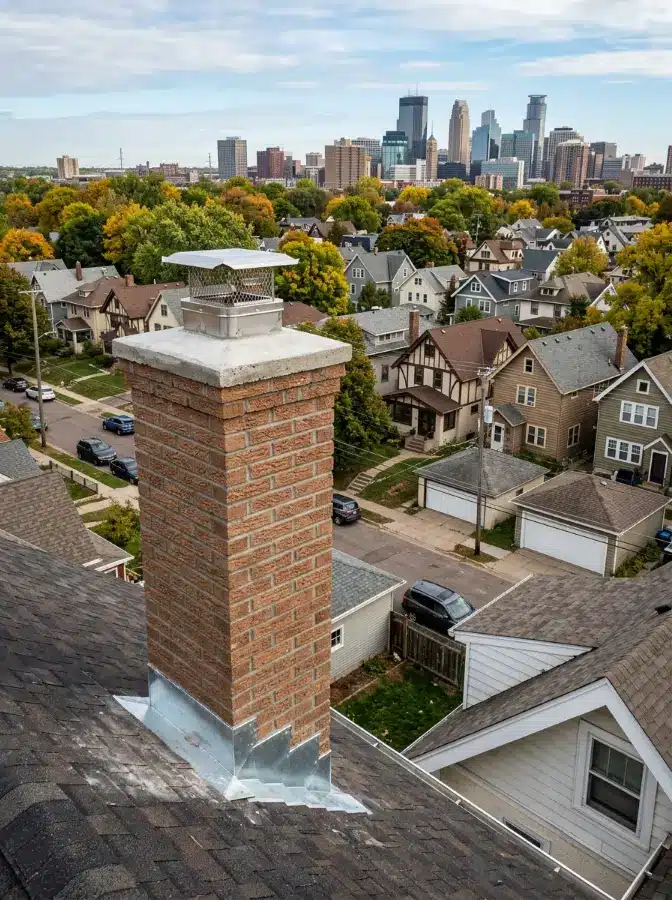
How Brian Dobuis Traces a White Deposit Back to Its Source
Horizontal Band
A band at a consistent height across one face almost always corresponds to a mortar joint at that elevation, where water moves laterally before evaporating.
Fans From a Point
A deposit fanning outward from a single point suggests concentrated entry — often a crown crack or a cap gap directing water to one spot.
Low Near the Roofline
A deposit low on the stack points toward the flashing junction.
Written Findings Mean You Know Exactly What Was Found
How ChimTech Runs an Efflorescence Source Investigation & Removal
Deposit pattern analysis completed before any access — height, spread direction, concentration, and surface texture read before the structural evaluation.
Vapor permeability assessed before any product recommendation — a prior film-forming sealer changes the moisture path and the removal/repair sequence.
Each entry point evaluated in sequence — crown and cap first, then flashing, then mortar joints by elevation, then liner — ruling out each candidate before the next.
Deposit removal and written output completed the same visit — the surface treated and the written finding delivered before the crew leaves.
From Deposit Pattern to Documented Entry Point to Treated Surface
Reading the Deposit
The visit opens with a full read of the deposit pattern from ground level and rooftop access — location, height, spread direction, and surface texture recorded. The crew notes whether the deposit is surface crystallization or shows sub-surface pressure (crypto-efflorescence). Lime-mortar joints often show sub-surface staging earlier than harder Portland repairs, because lime allows more vapor movement.
Working Through the Entry Points
From the pattern, the most likely candidates are identified and evaluated in sequence: crown and cap for direct entry, flashing seat and mortar depth at the roofline, mortar recession by elevation on each face, and liner condition where moisture could migrate outward. Each is confirmed or ruled out against the deposit evidence — producing a confirmed location, not simply a cleaned brick face.
Removal & Written Finding
Once the entry point is confirmed, removal is completed with a method matched to masonry type and crystallization depth — surface deposits on sound brick with low-pressure cleaning and pH-neutral treatment; sub-surface staging on older masonry with a controlled approach that won't accelerate spalling. The written diagnostic output is completed on-site and reviewed with you before the crew departs.
Where ChimTech Performs Efflorescence Diagnostics & Removal
Ready to Find the Source and Clear the Deposit?
Frequently Asked Questions — Chimney Efflorescence
Efflorescence is white or gray crystalline salt residue left when water moves through masonry and evaporates at the surface — dry and powdery, and it doesn’t grow. Mold is biological, appears darker (black, green, or brown), and usually has a musty odor. Both indicate moisture, but they need different treatment. ChimTech confirms which is present during the pattern-reading phase before any product is applied.
Pressure washing removes the surface deposit but leaves the moisture path open — and on older Minneapolis brick, high pressure can drive moisture into already-compromised mortar joints or accelerate spalling on softer pre-1940 units. The deposit returns with the next rain. Effective removal requires matching the method to the crystallization depth and masonry type, which is assessed on-site before any cleaning begins.
In Minneapolis — where spring snowmelt delivers concentrated water volume and summer rain is frequent — most untreated entry points produce visible re-deposit within one to two seasons, and some within a single heavy rain if the path is well-established. That’s why the written finding, which names the specific repair needed, is delivered the same visit as the removal.
Not always active at the moment of inspection, but always evidence of a moisture path that has been used. Some Minneapolis chimneys show heavy deposit from a prior winter’s freeze-thaw with a source that’s dormant in summer. The diagnostic confirms whether the entry point is currently active or has been sealed by incidental repair — either way, the path is documented so you know whether a repair is still outstanding.
A standard visual inspection notes the presence of efflorescence as a surface condition. It doesn’t include the structured source investigation — deposit pattern mapping, sequential entry-point elimination, and written confirmation of the specific structural source — that this service provides. The two address different scopes and produce different outputs.
The three most frequent findings are deteriorated mortar joints requiring repointing, a failed or cracked chimney crown directing water inward, and compromised flashing at the roofline allowing water to track down behind the stack. The written finding names which of these — or which combination — applies to your specific property, so there’s no guesswork when scheduling the repair.